




Is Foam Waterproof? Open Cell, Closed Cell & Reticulated Foam
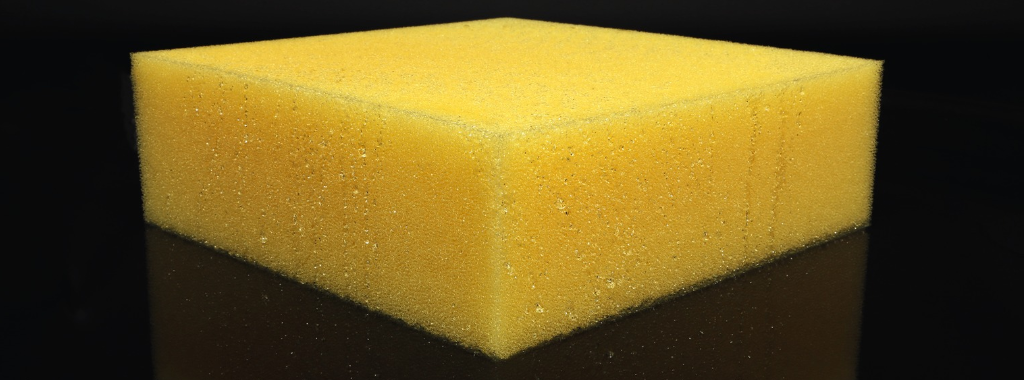
Is foam waterproof? Most foam is not: standard open cell upholstery foam and memory foam soak up water like a sponge, while closed cell foam such as Plastazote absorbs less than 1% water and reticulated QuickDry foam lets water drain straight through. The right answer depends on whether you need foam that stays dry, foam that dries fast, or ordinary foam protected by a waterproof cover. GB Foam Direct in High Wycombe offers all three types, from Plastazote closed cell foam to QuickDry outdoor cushion foam.
Key takeaways
- Open cell upholstery foam and memory foam absorb and hold water, so they need a waterproof or water resistant cover in wet places.
- Plastazote LD33 closed cell foam has a water absorption of less than 1% (ISO 2896) and is buoyant, UV stable and water resistant.
- In our drying test, normal foam still held 71% of the water poured into it after 3 hours, while QuickDry reticulated foam was practically dry.
- QuickDry has 20 to 30 pores per 25mm (PPI) and is treated with an antimicrobial agent to help prevent mould and mildew.
- No foam is fully waterproof in every situation: closed cell foam resists water, reticulated foam drains it and covers keep it out.
- GB Foam Direct has cut foam in High Wycombe since 1976, works to ISO 9001 and offers next working day delivery on orders placed before 11am Monday to Thursday.
Is Foam Waterproof?
Foam is not waterproof as a rule, because most cushion foam is open cell and its connected cells fill with water when it gets wet.
Whether a foam takes on water comes down to its cell structure. Open cell foam has cells that join up, so air and water move through it. Closed cell foam has sealed cells, so water cannot get in. Reticulated foam is an open cell foam with the cell walls removed, which lets water run out almost as fast as it goes in.
So the useful question is not just whether foam is waterproof, but what it does with water. Our guide to open cell foam explains the structure in more detail.
Does Foam Absorb Water?
Yes, standard upholstery foam absorbs water and holds on to it, which is why a sofa cushion left in the rain stays wet for a long time.
Our marine guidance notes that high density upholstery foam will retain almost all the water it comes into contact with. Foam that stays wet breaks down faster and is far more likely to grow mould, mildew and fungus.
Memory foam behaves the same way. It is an open cell viscoelastic foam, so it soaks up spills and is slow to dry, which is why mattresses and cushions used where spills happen are fitted with waterproof covers.
Open Cell, Closed Cell and Reticulated Foam Compared
The three foam types respond to water in very different ways, and the table below sets out how each one behaves.
| Foam Type | Cell Structure | What Happens to Water | Typical GB Product |
|---|---|---|---|
| Standard upholstery foam | Open cell | Absorbs and holds water, slow to dry | GB 33H, GB 39H, GB 41M upholstery grades |
| Memory foam | Open cell (viscoelastic) | Absorbs spills, slow to dry | Memory foam sheets and toppers |
| Reticulated foam | Open cell, cell walls removed | Water drains through, dries fast | QuickDry reticulated foam |
| Closed cell polyethylene | Closed cell | Water stays on the surface, less than 1% absorption | Plastazote LD33 |
What Is Waterproof Foam?
When people ask for waterproof foam they usually mean closed cell foam, which does not let water into its structure.
Plastazote LD33 is a closed cell polyethylene foam made by Zotefoams. Its specification gives water absorption of less than 1% when tested to ISO 2896, and it is buoyant, odourless and has good UV stability. That makes it a good fit for kneeling pads, kayak outfitting, flotation and packaging that may get wet. Plastazote sheets are 200cm x 100cm, from 5mm to 50mm thick depending on colour.
Closed cell foam is firm and springy rather than soft, so it is not a comfortable replacement for a deep seat cushion. For seating that gets wet, reticulated foam is usually the better choice.
Is Quick Dry Foam Waterproof?
Quick dry foam is not waterproof, it is free draining: water passes through its open structure and out of the cushion rather than being held inside.
Our QuickDry reticulated foam is made with Hydro-Blast Reticulation, which leaves a 3D open cell structure with 20 to 30 pores per 25mm. In our own drying test, two 35 x 35 x 5cm pieces each had 500ml of water poured over them in a 28°C room. After 60 seconds normal foam held 80% of the water and QuickDry held 40%. After 3 hours QuickDry was practically dry, while normal foam still held 71%.
QuickDry is also treated with an antimicrobial agent to help prevent mould and fungus. You can order it as outdoor cushion foam cut to size or as reticulated foam sheets of 230cm x 115cm from 1 inch (25mm) to 4 inches (100mm) thick.
Which Foam Should You Choose for Wet Conditions?
Choose the foam by how it will meet water: rain and spray call for QuickDry, standing water or flotation calls for closed cell foam, and indoor spills call for standard foam with a waterproof cover.
| Application | Recommended Foam | Why |
|---|---|---|
| Garden and patio cushions | QuickDry reticulated foam | Drains after rain and dries quickly |
| Boat cockpit and deck cushions | QuickDry reticulated foam | Copes with spray and rain, resists mould |
| Kneeling pads and sit mats | Plastazote LD33 | Does not soak up water from wet ground |
| Kayak seats and flotation | Plastazote LD33 | Buoyant and water resistant |
| Packaging that may get damp | Plastazote LD33 | Less than 1% water absorption |
| Indoor seats and mattresses with spill risk | Upholstery foam or memory foam with a waterproof cover | The cover keeps liquid out of open cell foam |
For boats in particular, see our replacement boat cushions range, which can be cut in QuickDry for exposed seating.
How to Keep Foam Cushions Dry Outdoors
Pair the right foam with a cover and a little care, and outdoor cushions will dry quickly and last longer.
Choose the right foam. Use QuickDry reticulated foam for cushions that will be left outside, or Plastazote for thin pads that sit on wet ground.
Use a drainage friendly cover. Pick an outdoor fabric and consider a mesh panel or drainage holes on the underside so water can escape.
Stand cushions on edge after rain. Turn cushions on their side so water drains out of the foam and air reaches both faces.
Avoid sealing wet foam in plastic. Let foam dry before storing it, because wet foam in a sealed bag is more likely to grow mould.
Store cushions under cover in winter. Keep cushions in a dry, ventilated shed or box over the colder months.
Clean spills promptly. Blot spills on indoor foam straight away and follow our foam cleaning advice before the liquid soaks in.
If standard foam does get soaked, our guide on how to clean foam explains how to wash and dry it without damaging it.
Mistakes to Avoid with Foam and Water
- Using upholstery foam outdoors. Standard foam soaks up rain and stays wet, which shortens its life and invites mould.
- Calling water resistant waterproof. A water resistant cover slows water down, but seams and zips can still let some through.
- Choosing closed cell foam for deep seats. Plastazote is firm and is better for pads and mats than for thick, soft seat cushions.
- Wringing foam to dry it. Twisting wet foam can tear it; press water out gently instead.
- Ignoring condensation. Foam on boats and in vans can get damp from below, so allow ventilation under cushions and mattresses.
Why Choose GB Foam Direct?
GB Foam Direct has converted foam in High Wycombe since 1976, using CNC cutting and experienced freehand cutters, and works to ISO 9001. We stock open cell upholstery foam sheets, QuickDry reticulated foam and Plastazote closed cell foam, so you can choose by how the foam will meet water. Our foam carries a 5 year guarantee against faults in manufacture, and orders placed before 11am Monday to Thursday are eligible for next working day delivery.
Speak to Our Team
If you need help choosing a foam for wet or outdoor use, call us on 01494 441177, email sales@gbfoam.com or fill out our contact form. We are in the office from 9am to 5pm Monday to Thursday and 9am to 3pm on Friday.
Is Foam Waterproof FAQs
Is foam waterproof?
Most foam is not waterproof. Standard open cell upholstery foam and memory foam absorb water, closed cell foam such as Plastazote absorbs less than 1%, and reticulated QuickDry foam lets water drain through. Choose the type by how the foam will meet water.
Does foam absorb water?
Yes, open cell foam absorbs water because its cells are connected. Standard upholstery foam holds most of the water it takes in, so it is slow to dry. Closed cell foam does not absorb water in the same way.
Is closed cell foam waterproof?
Closed cell foam is water resistant rather than fully waterproof, but in practice it takes on very little water. Plastazote LD33 has a water absorption of less than 1% when tested to ISO 2896. It is also buoyant, so it can be used in and around water.
What foam is best for outdoor cushions?
QuickDry reticulated foam is the best choice for outdoor cushions. Its open structure lets rain drain straight through, and in our test it was practically dry after 3 hours while normal foam still held 71% of its water. It is also treated to help prevent mould.
Is memory foam waterproof?
No, memory foam is an open cell foam and absorbs liquid. Memory foam mattresses and cushions used where spills are likely should have a waterproof or water resistant cover. Wet memory foam should be dried thoroughly before use.
Can outdoor cushions stay out in the rain?
Cushions made with reticulated foam and a cover that allows drainage should be fine if left in the rain. Standard foam cushions will soak up water and should be brought in. Storing all cushions under cover over winter will extend their life.
How long does wet foam take to dry?
Drying time depends on the foam type, thickness and conditions. In our test with 5cm thick foam, QuickDry was practically dry after 3 hours, while normal foam still held 71% of the water. Thick standard foam can stay damp for much longer.
Can I make standard foam waterproof?
You cannot change the cell structure of standard foam, but you can protect it. A waterproof or water resistant cover keeps liquid out, and wrapping foam in a plastic liner under the cover adds a further barrier for indoor use.

Cameron has emerged as a key marketing expert since joining GB Foam Ltd in 2017. A graduate of the University of Winchester, with a professional background in Public Relations; he has combined his content writing and brand awareness expertise with an in-depth knowledge of foam products and foam conversion technology to enhance the company’s marketing strategies and industry presence. Cameron has led numerous marketing campaigns, in both B2B and B2C segments, to further brand recognition and open up new business avenues worldwide.