




Foam Dog Steps & Ramps for Beds & Sofas: Sizes & Foam Grades
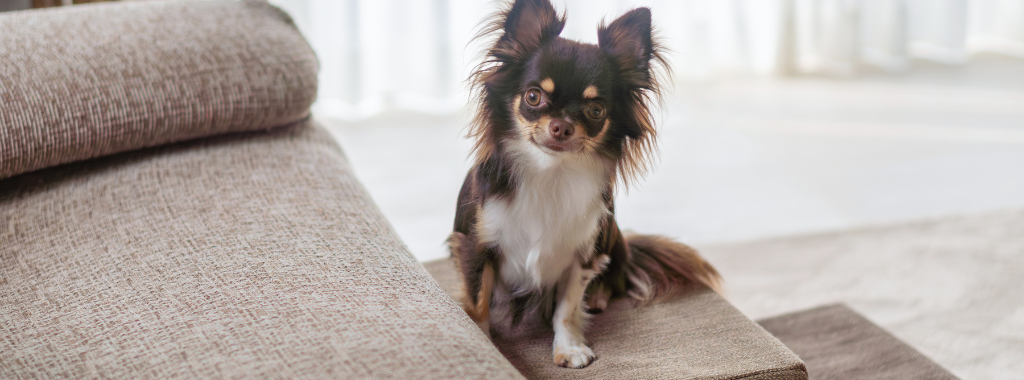
Foam dog steps are lightweight blocks of firm foam, shaped as steps or a ramp, that let a dog climb onto a bed or sofa instead of jumping. They are quiet, soft at the edges and easy to move, and they last when the foam is a high density grade that keeps its shape. GB Foam Direct cuts the foam for dog steps and ramps to your sizes, or replaces the worn foam inside steps you already own.
Key takeaways
- Foam dog steps should reach the height of the bed or sofa top, or sit slightly below it, so your dog steps across rather than up.
- Divide the total height by the number of steps to find each step height, and make every tread deep enough for all four paws.
- Hard, high density grades such as GB 39H Luxury Hard (37 to 41 kg/m3) and GB 42H Superior Hard (38 to 42 kg/m3) hold their edges.
- A non-slip cover on the treads and a grippy base stop the steps sliding on wooden or tiled floors.
- If your dog has a back or joint problem, ask your vet whether steps or a ramp suits them better.
- GB Foam Direct has cut foam in High Wycombe since 1976 and gives a 5 year guarantee against faults in manufacture.
What Are Foam Dog Steps?
Foam dog steps are a staircase or slope made from firm foam that gives a dog a safe route onto and off furniture. They are usually two to five steps high and are covered in a removable fabric cover.
Owners use them for small breeds, older dogs and long backed dogs that struggle with the jump onto a high bed. Pet behaviour writers note that jumping down onto slippery floors is a common cause of strains in dogs of all sizes, which is why many owners prefer a step or ramp.
Foam has clear advantages over wood or plastic. It is light enough to move between rooms, has no hard edges, and makes almost no noise when a dog uses it at night.
Should You Choose Dog Steps or a Ramp?
Choose steps when floor space is tight and your dog climbs confidently, and choose a ramp when your dog prefers a gentle slope. A ramp of the same height needs a much longer footprint than steps.
| Option | Footprint | Suits | Foam Shape |
|---|---|---|---|
| Foam steps | Compact | Confident climbers and small rooms | Stacked blocks or a stepped custom shape |
| Foam ramp | Long | Dogs that dislike steps | Triangle wedge cut to length and height |
| Single platform step | Very compact | Low sofas and car boots | One rectangular block |
Retail guides suggest a ramp or step unit should be equal to, or slightly shorter than, the surface it leads to. That way your dog steps across onto the bed rather than having to climb a final lip.
How Do You Size Foam Dog Steps?
You size foam dog steps from the height of the furniture top: divide that height by the number of steps you want, and give each tread enough depth for your dog to stand on with all four paws.
For example, a bed top at 60cm with four steps gives a step height of 15cm, with the top step at 60cm. If that rise looks tall for your dog, add a fifth step to bring each rise down to 12cm.
Measure the furniture with the mattress or cushion pressed down lightly, because soft tops sink when your dog steps across. Make the steps at least as wide as your dog’s body, and wider for a larger dog or a dog that tends to wobble.
Our guide on how to measure foam shows how to record length, width and thickness for each block you order.
What Foam Is Best for Dog Steps?
The best foam for dog steps is a hard, high density polyurethane grade, because it supports the dog’s weight on a small paw area and keeps square edges. Soft grades round over and sag at the front of each tread.
| Grade | Density (kg/m3) | Hardness (N) | Best For |
|---|---|---|---|
| GB 33H Average Hard | 31.4 to 34.7 | 160 to 220 | Small dogs and light use |
| GB 39H Luxury Hard | 37 to 41 | 180 to 220 | Most dogs, everyday use |
| GB 42H Superior Hard | 38 to 42 | 220 to 300 | Larger dogs and heavy daily use |
| Plastazote LD33 | 33 (closed cell) | Firm, wipe clean | Thin top layer that resists moisture |
Higher density means the foam lasts longer, as our guide to high density foam explains, while the hardness figure tells you how firm it feels underfoot.
Which Foam Dog Step Setup Should You Choose?
| Dog and Furniture | Recommended Setup | Suggested Grade | Why |
|---|---|---|---|
| Small dog, standard sofa | Two or three stacked blocks | GB 33H Average Hard | Light dog, low height, lower cost |
| Small or long backed dog, high bed | Four or five steps or a long wedge ramp | GB 39H Luxury Hard | Lower rise per step and firm treads |
| Medium or large dog | Wide steps with deep treads | GB 42H Superior Hard | Highest hardness for heavier weight |
| Older dog that dislikes steps | Triangle wedge ramp | GB 39H Luxury Hard | Gentle slope with no edges to climb |
| Worn steps you already own | Replacement foam cut to the old cover | Match the use above | Keeps your cover, restores the shape |
How to Make Foam Dog Steps
To make foam dog steps, measure the height of the furniture, work out the size of each step, order firm foam blocks or a wedge cut to size, and fit a non-slip cover.
Measure the furniture height. Measure from the floor to the top of the mattress or seat cushion where your dog gets on, pressing down lightly to allow for the cushion sinking.
Decide on steps or a ramp. Choose steps if floor space is tight, or a ramp if your dog prefers a gentle slope and you have room for a longer piece.
Work out the step sizes. Divide the total height by the number of steps you want, then make each tread deep enough for your dog to stand on with all four paws.
Choose a firm grade. Pick a hard, high density grade such as GB 39H Luxury Hard or GB 42H Superior Hard so the steps keep their edges under repeated use.
Order the blocks or wedge. Order rectangular blocks of decreasing length to stack into steps, a triangle wedge for a ramp, or send us a template for a one piece stepped shape.
Cover it and add grip. Fit a snug, washable cover with a non-slip fabric on the treads and a grippy base so the steps do not slide on hard floors.
Introduce it slowly. Place the steps where your dog normally jumps up and reward each careful step until using them becomes a habit.
GB Foam Direct cuts cubes, rectangles, triangle wedges and custom shapes from a template through our foam cut to size and shape service, and our guide on how to cut foam helps if you want to trim blocks at home.
Mistakes to Avoid
- Using soft foam. Soft grades sag at the front edge, so the steps feel unstable and wear out quickly.
- Making steps too narrow. A narrow tread makes a dog twist or hop, which defeats the point of having steps.
- Leaving a gap at the top. Steps that stop well below the bed top still leave a jump at the end.
- Skipping a grippy base. Foam on a wooden or tiled floor can slide as your dog climbs.
- Using a slippery cover. Smooth fabric on the treads gives paws little grip, so choose a textured, non-slip fabric.
Why Choose GB Foam Direct?
GB Foam Direct has converted foam in High Wycombe since 1976, cutting on CNC machines and by hand for home and trade customers. Every block is cut to your sizes, our upholstery grades are density tested to BS EN ISO 845 and we give a 5 year guarantee against faults in manufacture. If you need a stretch layer to help foam slide into a cover, see our Dacron and stockinette guide.
Speak to Our Team
If you need help choosing foam for dog steps or a ramp, call us on 01494 441177, email sales@gbfoam.com or fill out our contact form. We are in the office from 9am to 5pm Monday to Thursday and 9am to 3pm on Friday.
Foam Dog Steps FAQs
Are foam dog steps better than wooden ones?
Foam dog steps are lighter, quieter and have no hard edges, which many owners prefer indoors. Wooden steps are rigid and suit very heavy dogs or permanent setups. Foam steps last well when they are made from a hard, high density grade.
How high should dog steps be?
Dog steps should reach the height of the bed or sofa top, or sit slightly below it, so your dog steps across rather than up. Measure the furniture with the top pressed down lightly. Divide that height by the number of steps to find each step height.
What density foam is best for dog steps?
A high density hard grade is best for dog steps. GB 39H Luxury Hard has a density of 37 to 41 kg/m3 and suits most dogs, while GB 42H Superior Hard, at 38 to 42 kg/m3 with the highest hardness, suits larger dogs. Soft grades lose their edges too quickly.
Can I replace the foam in my dog steps?
Yes, you can replace worn foam in dog steps by measuring the inside of the cover and ordering new blocks cut to those sizes. Choose a firmer grade than the original if the old steps sagged. GB Foam Direct cuts replacement blocks and wedges to your measurements.
Is a ramp or steps better for a small dog?
Both can suit a small dog, and the right choice depends on the dog and your space. Steps take up less floor space, while a ramp gives a gentle slope with no edges to climb. If your dog has a back or joint problem, ask your vet which suits them.
How do I stop foam dog steps from sliding?
Stop foam dog steps sliding by fitting a cover with a grippy, non-slip base or adding rubber grips underneath. Place them on a rug rather than a bare wooden or tiled floor if you can. Textured fabric on the treads also gives paws more grip.
How many steps do dog stairs need?
Most dog stairs for beds and sofas have two to five steps, depending on the furniture height and your dog. More steps give a lower rise per step, which suits small and older dogs. A low sofa may need only one or two.

Cameron has emerged as a key marketing expert since joining GB Foam Ltd in 2017. A graduate of the University of Winchester, with a professional background in Public Relations; he has combined his content writing and brand awareness expertise with an in-depth knowledge of foam products and foam conversion technology to enhance the company’s marketing strategies and industry presence. Cameron has led numerous marketing campaigns, in both B2B and B2C segments, to further brand recognition and open up new business avenues worldwide.