




Garage Wall Protector: Foam to Stop Car Doors Hitting the Wall
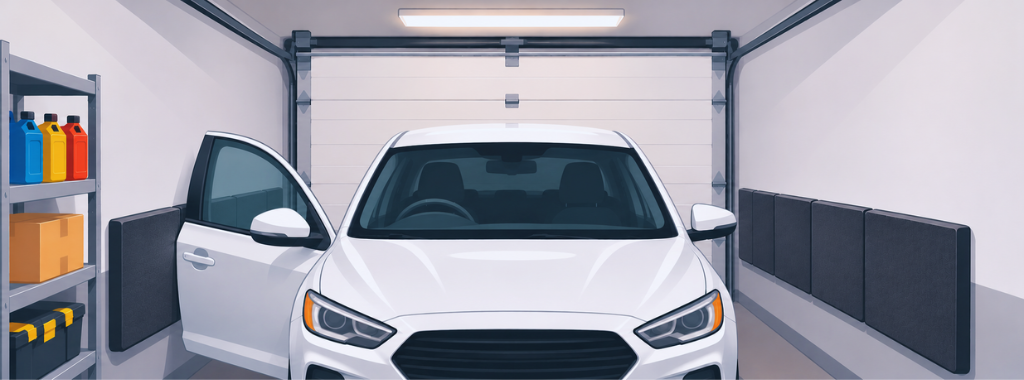
A garage wall protector is a strip or panel of foam fixed to a garage wall at the height where your car door opens against it, so the door edge touches soft foam instead of brick, block or a pillar. Closed cell foam is the best material because it is tough, water resistant and easy to cut. GB Foam Direct in High Wycombe supplies Plastazote closed cell foam sheets and reconstituted foam that you can cut to fit your garage and your car.
Key takeaways
- A garage wall protector stops chipped paint and dents when a car door opens against a wall or pillar.
- Plastazote LD33 is a 33 kg/m3 closed cell foam with water absorption under 1%, so it suits damp, unheated garages.
- Plastazote LD33 comes in 200cm x 100cm sheets, from 5mm to 50mm thick in black and white and 10mm to 50mm in colours.
- Most ready made garage door buffers are 10 to 30mm thick and fixed with adhesive.
- The RAC reports that the top selling cars grew from an average 1.5m wide in 1965 to 1.8m in 2020, while the average garage door is 2.1m wide.
- GB Foam Direct has converted foam in High Wycombe since 1976, works to ISO 9001 and offers next working day delivery on orders before 11am Monday to Thursday.
What Is a Garage Wall Protector?
A garage wall protector is a cushioning layer of foam on the wall beside a parked car, placed where the door edge would otherwise hit.
It is also called a car door protector, wall buffer or garage bumper. Ready made versions are usually foam strips with a self adhesive back, often in black and yellow. Making your own from a foam sheet lets you match the length, height and thickness to your car.
Why Do Car Doors Hit Garage Walls?
Car doors hit garage walls because many garages are too narrow for modern cars.
The RAC, citing RAC Foundation research, reports that the five best selling cars averaged 1.5m wide and 3.9m long in 1965 and 1.8m wide and 4.3m long in 2020. It puts the average garage door at 2.1m wide and says an RAC Home Insurance poll found 53% of garage owners never park in their garage.
Newer homes are being built with more room. Buckinghamshire Council’s parking guidance sets a minimum internal garage size of 6.0m long by 3.0m wide for new developments, but most existing garages are smaller.
What Foam Is Best for a Garage Wall Protector?
The best foam for a garage wall protector is a firm closed cell foam such as Plastazote LD33, because it absorbs knocks, keeps its shape and does not soak up water.
| Foam | Key Properties | Thickness Available | Best For |
|---|---|---|---|
| Plastazote LD33 (black or white) | 33 kg/m3, closed cell, under 1% water absorption | 5mm to 50mm sheets, 200cm x 100cm | Most garages, damp or unheated spaces |
| Plastazote LD33 (colours) | As above, in blue, green, grey, orange, purple, red or yellow | 10mm to 50mm sheets, 200cm x 100cm | High visibility strips and pillars |
| Reconstituted chip foam (GB CHIP) | Firm, tough and resilient recycled foam | 1/2 inch (12mm) to 4 inches (100mm) | Dry garages and larger pads on a budget |

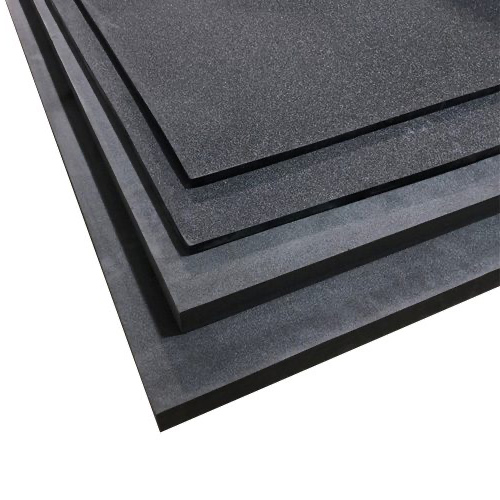
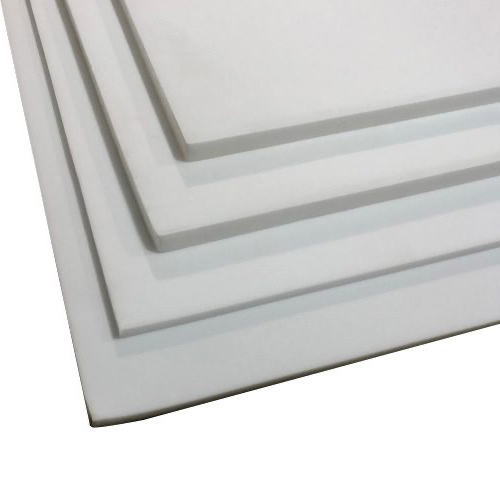
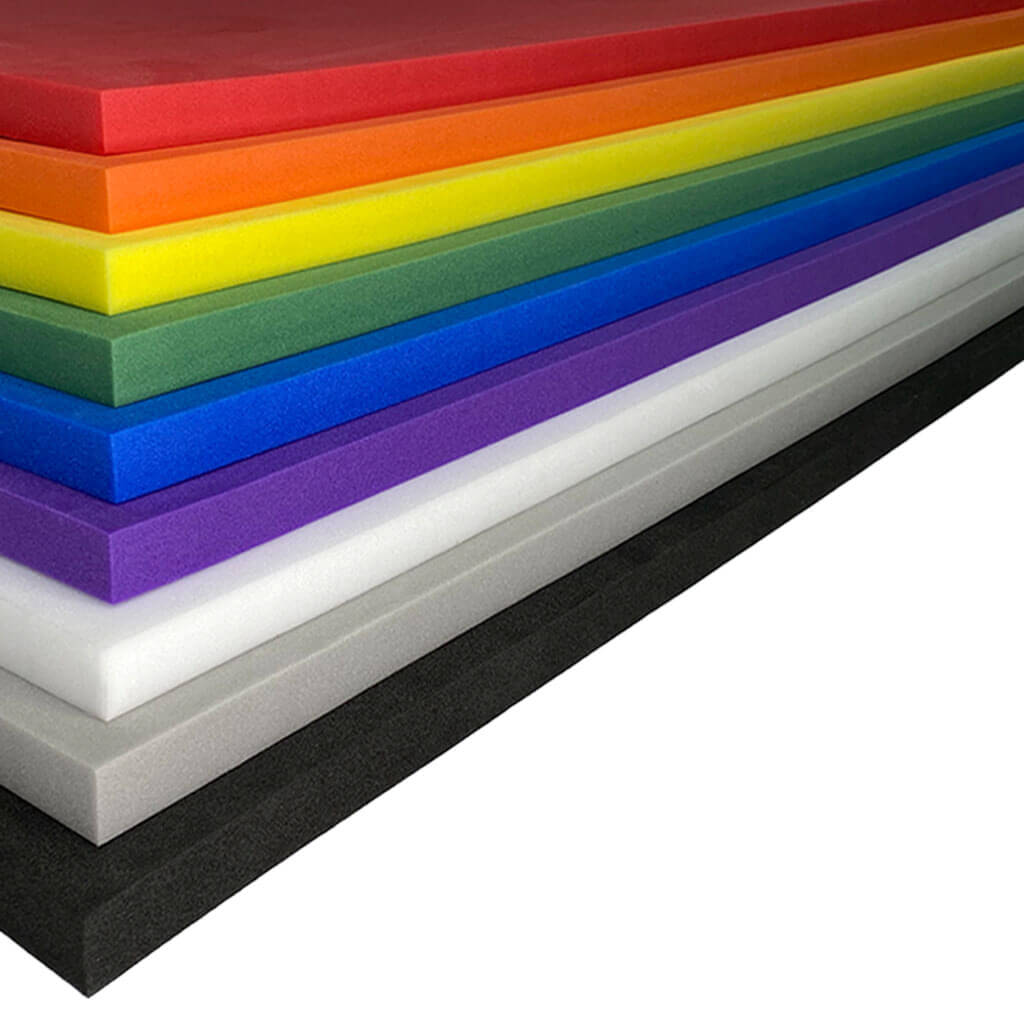
Plastazote is a closed cell polyethylene foam with high shock absorption, and it is weatherproof with good ultraviolet stability. Our guide to reconstituted foam explains how chip foam is made from recycled offcuts.
How Thick Should a Garage Wall Protector Be?
A garage wall protector is usually 10 to 30mm thick, which is the range most ready made garage door buffers use.
In a tight garage, every millimetre counts, so use the thinnest foam that stops the door reaching the wall. A heavy door, or a spot where doors are often opened quickly, benefits from 20 to 30mm. Wider foam on pillars and corners gives a little more margin for error.
Which Garage Wall Protector Should You Choose?
Choose by your garage conditions and how much room you have beside the car.
| Situation | Recommended Foam | Why |
|---|---|---|
| Narrow garage, little door room | Plastazote LD33, 10mm | Protects the door while taking little width |
| Damp or unheated garage | Plastazote LD33, 20 to 25mm | Closed cells resist moisture and mould |
| Pillar or corner in a shared car park | Coloured Plastazote LD33, 25 to 30mm | Easy to see and firm on impact |
| Dry garage, large wall area | Reconstituted chip foam, 1/2 to 1 inch | Firm, durable and low cost |
| Two cars of different heights | One taller Plastazote strip | Covers both door contact points |
These thickness choices are our recommendations for typical garages. If you are unsure, speak to our team with your measurements.
How to Make and Fit a Garage Wall Protector
Make a garage wall protector by measuring where your doors touch the wall, cutting foam to fit and bonding it to a clean surface.
Park the car where you normally leave it. Park in your usual spot and turn the engine off. Do this for each car that uses the garage, as door heights and widths differ.
Open each door slowly to the wall. Open the driver’s door gently until the edge just touches the wall, and mark the top and bottom of the contact point with masking tape. Repeat for the passenger side and any rear doors.
Measure the strip size. Measure from below the lowest mark to above the highest mark for the height, and allow extra length either side for parking further forward or back. Write the sizes down before you order.
Choose your foam and thickness. Pick Plastazote LD33 for a clean, water resistant protector, or reconstituted chip foam for a firm, low cost pad. Thicker foam gives more cushion but takes more width from a tight garage.
Cut the foam to size. Mark the sheet with a straight edge and cut with a sharp blade in several light passes. Our guide to cutting foam shows the best technique.
Clean and prepare the wall. Brush off dust and loose paint and make sure the wall is dry, because adhesive will not hold on a dusty or damp surface. Test the adhesive on a small patch first.
Fix the protector to the wall. Bond the foam with a spray adhesive suitable for foam, or screw it on through a thin batten or washers on a crumbly wall. Press it firmly and let it cure before you open a door against it.
We sell a heavy duty spray adhesive for foam, and our guide to glue for foam covers bonding foam to different surfaces. For more complex shapes, our foam cut to size and shape service offers over 25 standard shapes and a custom option.
Benefits of a Foam Garage Wall Protector
- Protects your paintwork. Foam stops the door edge chipping on brick, block or concrete.
- Protects the wall too. Repeated knocks wear away plaster and paint, which foam prevents.
- Made to fit. Cutting your own lets you match the exact height, length and position of each door.
- Handles damp. Closed cell Plastazote takes in less than 1% water, so it suits cold, damp garages.
- Easy to see. Coloured Plastazote helps drivers spot pillars and corners when parking.
Our guide to cutting foam explains how to get clean edges at home.
Why Choose GB Foam Direct?
GB Foam Direct has converted foam in High Wycombe since 1976, combining CNC cutting with experienced freehand cutters, and works to ISO 9001. We serve everyone from one off home projects to large manufacturers, and our foam carries a 5 year guarantee against faults in manufacture. Orders before 11am Monday to Thursday are eligible for next working day delivery, and Saturday delivery is available.
Speak to Our Team
If you need help choosing foam for a garage wall protector, call us on 01494 441177, email sales@gbfoam.com or fill out our contact form. We are in the office from 9am to 5pm Monday to Thursday and 9am to 3pm on Friday.
Garage Wall Protector FAQs
What is the best foam for a garage wall protector?
The best foam for a garage wall protector is a closed cell foam such as Plastazote LD33, because it is tough, absorbs knocks and takes in less than 1% water in a damp garage. Reconstituted chip foam is a firm, low cost alternative for a dry garage. Soft seating foam compresses too easily and soaks up moisture, so avoid it.
How thick should a garage wall protector be?
A garage wall protector is usually 10 to 30mm thick, which is the range most ready made self adhesive buffers come in. Thinner foam keeps more width in a tight garage, while 20 to 30mm gives more cushion for a heavy door. Choose the thinnest foam that stops the door edge reaching the wall.
How high should a garage wall protector be?
A garage wall protector should cover the height where your door edge touches the wall, which varies by car. Open each door slowly to the wall, mark the contact point and add a margin above and below. Cars with higher doors, such as SUVs, need the strip set higher than a small hatchback.
How do you stick foam to a garage wall?
You stick foam to a garage wall with a spray adhesive suitable for foam, on a wall that is clean, dry and free of loose paint. Press the foam on firmly and let it cure before using it. On crumbly brick or block, screw the foam on through a thin batten or large washers instead.
Can I make my own garage wall protector?
Yes, you can make your own garage wall protector by cutting closed cell foam to the size of the area your door hits and fixing it to the wall. A sharp blade like a utility knife helps give clean cuts. Making your own lets you match the height, length and colour to your car and garage.
Why do car doors hit the garage wall?
Car doors hit the garage wall because modern cars are much wider than the cars many garages were built for. The RAC reports that the average width of the top selling cars grew from 1.5m in 1965 to 1.8m in 2020, while the average garage door is 2.1m wide. That leaves little room to open a door fully.
Is Plastazote foam waterproof?
Plastazote LD33 is highly water resistant, with a water absorption of less than 1%, because its cells are closed. It is also weatherproof with good ultraviolet stability. That makes it a good choice for unheated garages that get damp in winter.

Cameron has emerged as a key marketing expert since joining GB Foam Ltd in 2017. A graduate of the University of Winchester, with a professional background in Public Relations; he has combined his content writing and brand awareness expertise with an in-depth knowledge of foam products and foam conversion technology to enhance the company’s marketing strategies and industry presence. Cameron has led numerous marketing campaigns, in both B2B and B2C segments, to further brand recognition and open up new business avenues worldwide.