




Foam Turning Yellow: Why It Happens and Why It Rarely Matters
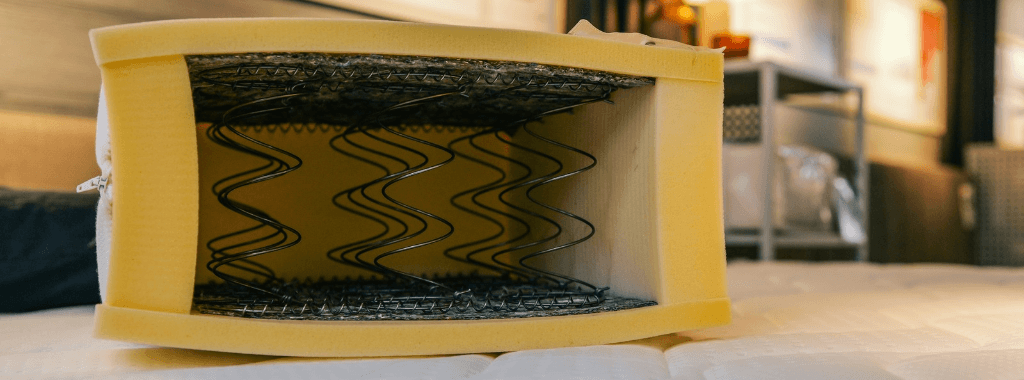
Foam turning yellow is a natural chemical change: light, oxygen and pollutants in the air react with polyurethane and form yellow compounds on the surface. On its own, the colour does not mean the foam has lost its comfort or support, and new foam often arrives with a yellow edge. At GB Foam Direct in High Wycombe we cut upholstery foam to size every day, and below we explain what causes yellowing, how to tell colour change from real wear, and when cushion foam needs replacing.
Key takeaways
- Polyurethane foam made with aromatic isocyanates yellows when light and oxygen form quinoid chromophores, a process called photo-oxidation.
- Nitrogen oxides from gas appliances and traffic react with the antioxidant BHT to form a yellow compound, a process known as gas fading.
- Yellowing starts on exposed surfaces, so a yellow edge with a paler core is normal on new foam.
- Colour alone is not a reason to replace foam; crumbling, sagging and slow recovery are.
- Conservation research shows foam ages slowest in the dark with limited air and moderate humidity.
- GB Foam Direct has cut foam in High Wycombe since 1976, works to ISO 9001 and gives a 5 year guarantee against faults in manufacture.
Why Does Foam Turn Yellow?
Foam turns yellow because the chemistry of polyurethane reacts with light and oxygen, creating coloured compounds in the outer layer of the foam.
Flexible polyurethane foam is made by reacting a polyol with an isocyanate, and the isocyanates used for cushion and upholstery foam are aromatic. A 2023 study in the journal Polymers by Costantini and colleagues explains that aromatic diisocyanates drive photo-oxidation, forming quinoid chromophores, the compounds that make foam look yellow.
Foam yellows faster than solid plastics because its large surface area and open pores let light, oxygen and pollutants reach deep into the material, a point the National Library of the Czech Republic also makes in its research on plastics.
Our own foam FAQs make the same point in brief: foam changes colour when exposed to light and air because of oxidation, and our foam is not UV protected. For the basics of how the material is made, see what is polyurethane foam.
What Else Causes Foam Discolouration?
Besides light, foam discolouration comes from nitrogen oxides in the air, heat during manufacture and, for some foam types, moisture.
Gas fading is yellowing caused by nitrogen dioxide in polluted air. Research by Kenneth Smeltz, published in Textile Chemist and Colorist, showed that nitrogen dioxide reacts with the antioxidant butylated hydroxytoluene (BHT) to form a yellow compound called a quinone methide. The same reaction is why foam kept near gas heaters, boilers or busy roads can turn yellow even in a dark room.
Scorch is discolouration caused by heat while the foam is made. Levchik and colleagues, writing in the Journal of Cellular Plastics in 2005, found that scorch is mainly caused by the oxidation of primary amines into coloured quinone type compounds, and that antioxidants control it.
| Cause | What Happens | Where You See It | Affects Performance? |
|---|---|---|---|
| UV and visible light | Light and oxygen turn the aromatic urethane groups into yellow quinoid compounds | Faces nearest windows, cushion tops, exposed edges | Not at first; long exposure breaks polymer bonds and leads to crumbling |
| Nitrogen oxides (gas fading) | Nitrogen dioxide reacts with phenolic antioxidants such as BHT to form a yellow quinone methide | Foam stored near gas heaters, boilers or traffic | No, it is a surface colour change |
| Heat during manufacture (scorch) | Heat from the foaming reaction oxidises amine groups into coloured quinone type compounds | A yellow brown tinge inside some blocks | No, when it is light discolouration |
| Moisture (hydrolysis) | Water attacks ester based foam and breaks the polymer chains | Damp cushions, boats, outdoor seating | Yes, ester foam can soften and crumble |
Does Foam Turning Yellow Affect Performance?
Foam turning yellow does not affect performance in its early stages, because the colour change happens long before the foam structure breaks down.
Costantini and colleagues describe photo-oxidation as a sequence: discolouration comes first, and only prolonged exposure cleaves the bonds in the polymer network and eventually crumbles the material. A yellow cushion can therefore support you exactly as it did when it was white.
That does not mean yellow foam is always fine. Foam that has spent years in sunlight, heat or damp can be yellow and degraded at the same time, and ester based foams are more prone to breaking down through hydrolysis in damp conditions. The test is how the foam feels and holds together, not its colour.
Why Is New Foam Yellow on the Edges?
New foam is yellow on the edges because those faces were exposed to light and air while the foam was cured, stored and transported, while the core was protected.
A freshly cut face is often paler than the outside and gradually matches it once exposed. Our FAQs also note that slight colour variations appear during manufacture and do not make the foam defective. A yellow edge on a new seat pad is a cosmetic change, not a sign of old stock or a lower grade.
All of our upholstery foam sheets comply with the Furniture and Furnishings (Fire) (Safety) Regulations 1988. Our guide to fire retardant foam and fire safety explains what the regulations require.
How to Check Whether Yellow Foam Needs Replacing
Checking yellow foam takes about 10 minutes and separates colour change from genuine wear.
Unzip the cover and look at the whole cushion. Compare the outer skin with any cut face or the underside, because light and air yellow the exposed surfaces first and leave the core paler.
Press the foam firmly with your palm. Healthy foam pushes back and recovers its shape straight away, while tired foam feels flat, slow or hollow.
Rub the yellowed surface with your fingers. If it stays intact, the change is colour only; if it flakes, powders or leaves crumbs, the foam itself is breaking down.
Check the edges and corners. Crumbling usually starts where the foam is thinnest and most exposed, so look for edges that tear or break away when handled.
Sit on the cushion and judge the support. If you sink through to the frame or feel the base, the foam has lost its support, whatever colour it is.
Decide whether to keep, refill or replace. Keep foam that is yellow but resilient, and replace foam that crumbles, sags or no longer recovers.
Which Action Should You Choose?
Choose your action from how the foam feels and holds together, using colour only as a prompt to check.
| What You See | Recommended Action | Why |
|---|---|---|
| Yellow edge on newly delivered foam | Use it as normal | Surface oxidation from light and air; the grade and support are unchanged |
| Yellow top, foam firm and springy | Keep it and keep the cover on | Colour only; the foam still supports you |
| Yellow and slightly flat, no crumbling | Add a Dacron wrap or replace with a firmer grade | Support has dropped, which colour does not tell you |
| Yellow, dusty, crumbling edges | Replace the foam | The polymer is breaking down and support will keep falling |
| Brown, sticky or powdery foam | Replace the foam | Advanced degradation; the foam has reached the end of its life |
If you are replacing seat foam, GB 33H or GB 39H suit firm seats and GB 41M suits deeper seat cushions of 4 inches (10cm) and over. These are suggestions from our experience and customer feedback, and personal preference matters. A Dacron and stockinette wrap gives a softer, fuller finish, and our guide to fixing sagging sofa cushions covers foam that has lost its support.
How Do You Store Foam to Stop It Yellowing?
Store foam in the dark, in a dry place with limited air movement, to slow yellowing as much as possible.
Costantini and colleagues recommend keeping polyurethane objects in dark conditions and avoiding extreme humidity. A 2017 doctoral study at NOVA University Lisbon by Susana de Sá stored polyurethane samples for 12 months under four conditions and found open air storage the most harmful and anoxic storage, with oxygen removed, the most protective. At home, keep spare foam in an opaque cover, in a cupboard away from sunlight, gas heaters and boilers.
Mistakes to Avoid with Yellowing Foam
- Replacing foam on colour alone. Yellow foam that is firm and intact still does its job, so check support before buying new foam.
- Ignoring crumbling because the colour looks fine. Foam can sag or lose its bounce whatever its colour, so judge it by feel and structure.
- Using bleach to whiten foam. The colour is part of the polymer, so bleach will not remove it and can damage the cells.
- Storing spare foam near a gas heater or boiler. Nitrogen oxides from combustion cause gas fading, even in the dark.
- Using indoor foam for wet outdoor seating. Damp speeds up breakdown, so QuickDry reticulated foam is the better choice for outdoor cushions and boats.
Why Choose GB Foam Direct?
GB Foam Direct has converted foam in High Wycombe since 1976, originally for the furniture trade. Our upholstery grades are density tested to BS EN ISO 845 and hardness tested to BS EN ISO 2439, so a yellow edge never changes the grade you ordered. We work to ISO 9001, give a 5 year guarantee against faults in manufacture, and orders placed before 11am Monday to Thursday are eligible for next working day delivery.
Speak to Our Team
If you need help deciding whether your yellow foam needs replacing, call us on 01494 441177, email sales@gbfoam.com or fill out our contact form. We are in the office from 9am to 5pm Monday to Thursday and 9am to 3pm on Friday.
Foam Yellowing FAQs
Why does foam turn yellow?
Foam turns yellow mainly because light and oxygen react with the aromatic isocyanate in polyurethane, forming coloured compounds called quinoid chromophores. Nitrogen oxides in the air and heat during manufacture can also add a yellow tinge.
Is yellow foam bad?
Yellow foam is not bad in itself, because early yellowing is a colour change on the surface rather than a loss of support. The foam only needs replacing when it also crumbles, sags or stops recovering its shape.
Why is my new foam yellow on the edges?
New foam is often yellow on the edges because those faces were exposed to light and air while the block cured, was stored or travelled to you. A yellow edge on new foam is a cosmetic change and does not mean the foam is old or a lower grade.
Can you stop foam from turning yellow?
You cannot stop polyurethane foam yellowing completely, but you can slow it right down. Keep foam inside its covers, out of direct sunlight, in a dry place away from gas heaters and traffic fumes. Conservation research shows that dark storage with limited air gives the slowest ageing.
Does yellow foam still meet fire regulations?
Our upholstery foam grades comply with the Furniture and Furnishings (Fire) (Safety) Regulations 1988, and a yellow tinge on new foam does not mean it is a different grade. Foam that has aged to the point of crumbling should be replaced for comfort and safety.
When should I replace yellow cushion foam?
Replace yellow cushion foam when it crumbles, leaves powder inside the cover, sags so you feel the frame, or no longer springs back after you press it. If the foam is yellow but still firm and intact, it can stay in use. Colour alone is not a reason to replace it.
Can you whiten yellow foam?
Yellow foam cannot be whitened back to its original colour, because the colour comes from a chemical change in the polymer, not from dirt on the surface. Bleach and strong cleaners can damage the foam cells.

Cameron has emerged as a key marketing expert since joining GB Foam Ltd in 2017. A graduate of the University of Winchester, with a professional background in Public Relations; he has combined his content writing and brand awareness expertise with an in-depth knowledge of foam products and foam conversion technology to enhance the company’s marketing strategies and industry presence. Cameron has led numerous marketing campaigns, in both B2B and B2C segments, to further brand recognition and open up new business avenues worldwide.